

You are using an out of date browser. It may not display this or other websites correctly.
You should upgrade or use an alternative browser.
You should upgrade or use an alternative browser.
OT: Watcha Readin?
- Thread starter Alfamale
- Start date


jrsuperstar
New member
Re: OT - Watcha Readin?
Has anyone had any experience with the Kindle or other E-Book readers? From what I have seen there really isn't many books available here in Canada? Why is that? Why can't I just buy what I want to buy? Also, I do not understand why an E-Book doesn't cost less than a real book, how can that be?
Has anyone had any experience with the Kindle or other E-Book readers? From what I have seen there really isn't many books available here in Canada? Why is that? Why can't I just buy what I want to buy? Also, I do not understand why an E-Book doesn't cost less than a real book, how can that be?


PQ
Leafs & Soccer Moderator
Re: OT - Watcha Readin?
there's a kindle global or something like that that you can order from amazon and it's made for Canada among other countries.
i use an "Astak Mentor". it's not as well-known as sony, kindle or the barnes & noble alternative, but it supports pdf, doc and txt as well as the much needed arabic language.. pretty cheap compared to others too

Montana
Champion
Re: OT - Watcha Readin?
If you haven't seen them, both Levitt and Dubner have had some great interviews on "Charlie Rose"......think their still available online, via the PBS website, if you ever wanted to check them out.
When I grabbed those two books, I also ordered.....

Outliers: The Story of Success

Chronic City
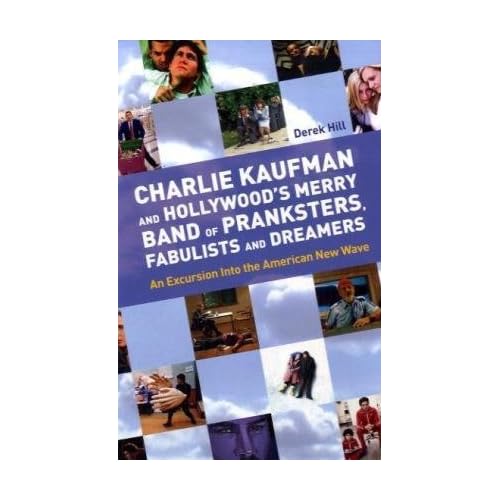
Charlie Kaufman and Hollywood's Merry Band of Pranksters, Fabulists and Dreamers: An Excursion Into the American New Wave

The Tipping Point: How Little Things Can Make a Big Difference
Yeah, always wanted to read them, but never got around to reading it until someone gave me one for xmas.
If you haven't seen them, both Levitt and Dubner have had some great interviews on "Charlie Rose"......think their still available online, via the PBS website, if you ever wanted to check them out.
When I grabbed those two books, I also ordered.....
Outliers: The Story of Success
Now that he's gotten us talking about the viral life of ideas and the power of gut reactions, Malcolm Gladwell poses a more provocative question in Outliers: why do some people succeed, living remarkably productive and impactful lives, while so many more never reach their potential? Challenging our cherished belief of the "self-made man," he makes the democratic assertion that superstars don't arise out of nowhere, propelled by genius and talent: "they are invariably the beneficiaries of hidden advantages and extraordinary opportunities and cultural legacies that allow them to learn and work hard and make sense of the world in ways others cannot." Examining the lives of outliers from Mozart to Bill Gates, he builds a convincing case for how successful people rise on a tide of advantages, "some deserved, some not, some earned, some just plain lucky."
Chronic City
Jonathan Lethem, the home-grown frontrunner of a generation of Brooklyn writers, crosses the bridge to Manhattan in Chronic City, a smart, unsettling, and meticulously hilarious novel of friendship and real estate among the rich and the rent-controlled. Lethem's story centers around two unlikely friends, Chase Insteadman, a genial nonentity who was once a child sitcom star and now is best known as the loyal fiancé of a space-stranded astronaut, and Perkus Tooth, a skinny, moody, underemployed cultural critic. Chase and Perkus are free-floating, dope-dependent bohemians in a borough built on ambition, living on its margins but with surprising access to its centers of power, even to the city's billionaire mayor. Paranoiac Perkus sees urgent plots everywhere--in the font of The New Yorker, in an old VHS copy of Dead Men Don't Wear Plaid--but Chronic City, despite the presence of death, politics, and a mysterious, marauding tiger, is itself light on plot. Eschewing dramatic staples like romance and artistic creation for the more meandering passions of friendship and observation, Chronic City thrives instead on the brilliance of Lethem's ear and eye. Every page is a pleasure of pitch-perfect banter and spot-on cultural satire, cut sharply with the melancholic sense that being able to explain your city doesn't make you any more capable of living in it.
Charlie Kaufman and Hollywood's Merry Band of Pranksters, Fabulists and Dreamers: An Excursion Into the American New Wave
Since the late 1990s, a subtle, subversive element has been at work within the staid confines of the Hollywood dream factory. Young filmmakers like Spike Jonze, Wes Anderson, Michel Gondry, David O. Russell, Richard Linklater, and Sofia Coppola rode in on the coattails of the independent film movement that blossomed in the early 1990s and have managed to wage an aesthetic campaign against cowardice of the imagination, much like their artistic forebears, the so-called Movie Brats—Coppola, Scorsese, De Palma, Altman, and Ashby among others—did in the 1970s. But their true pedigree can be traced back to the cinematic provocateurs of the Nouvelle Vague—such as Truffaut, Goddard, Chabrol, Rohmer, and Rivette—who, in the late 1950s and throughout the 1960s, liberated screens around the world with a series of films that challenged our assumptions of what the medium could offer and how stories could be told—all of them snapping with style as much as they delivered on ideas. Highly idiosyncratic yet intricately realized, accessible yet willing to overthrow the constraints of formal storytelling, surreal yet always grounded in human emotions, this new film movement captures the angst of its characters and the times in which we live, but with a wryness, imagination, earnestness, irony, and stylish wit that makes the slide into existential despair a little more amusing than it should be.
The Tipping Point: How Little Things Can Make a Big Difference
"The best way to understand the dramatic transformation of unknown books into bestsellers, or the rise of teenage smoking, or the phenomena of word of mouth or any number of the other mysterious changes that mark everyday life," writes Malcolm Gladwell, "is to think of them as epidemics. Ideas and products and messages and behaviors spread just like viruses do." Although anyone familiar with the theory of memetics will recognize this concept, Gladwell's The Tipping Point has quite a few interesting twists on the subject.
For example, Paul Revere was able to galvanize the forces of resistance so effectively in part because he was what Gladwell calls a "Connector": he knew just about everybody, particularly the revolutionary leaders in each of the towns that he rode through. But Revere "wasn't just the man with the biggest Rolodex in colonial Boston," he was also a "Maven" who gathered extensive information about the British. He knew what was going on and he knew exactly whom to tell. The phenomenon continues to this day--think of how often you've received information in an e-mail message that had been forwarded at least half a dozen times before reaching you.
Gladwell develops these and other concepts (such as the "stickiness" of ideas or the effect of population size on information dispersal) through simple, clear explanations and entertainingly illustrative anecdotes, such as comparing the pedagogical methods of Sesame Street and Blue's Clues, or explaining why it would be even easier to play Six Degrees of Kevin Bacon with the actor Rod Steiger. Although some readers may find the transitional passages between chapters hold their hands a little too tightly, and Gladwell's closing invocation of the possibilities of social engineering sketchy, even chilling, The Tipping Point is one of the most effective books on science for a general audience in ages. It seems inevitable that "tipping point," like "future shock" or "chaos theory," will soon become one of those ideas that everybody knows--or at least knows by name.
Last edited:

mbow30
Spudmeister Supreme
Re: OT - Watcha Readin?
freakonomics is great. haven't gotten around to reading super F, yet.
right now reading the proud highway.
nov was the busiest month of my life and left me mentally exhausted, so i took basically all of december off from thinking/reading.
have proud highway, last of the mohicans and flight of the creative class lined up to keep me busy for the next few weeks. waiting for chabon's new book (thx zeke) to come out in paperback (it should soon, if it hasn't already) to touch up on my contemp. lit.
mbow30
Spudmeister Supreme
Re: OT - Watcha Readin?
i've read cavalier and clay, policeman's union and mysteries of pittsburgh...
which chabon book did you read? Jews with Swords?
i've read cavalier and clay, policeman's union and mysteries of pittsburgh...
mbow30
Spudmeister Supreme
Re: OT - Watcha Readin?
i think you're taking it to an illogical end. it didn't seem like gladwell argued that talent wasn't important, just that hard work + circumstance (or luck if you want to call it that) can be just as important.
though i agree he doesn't talk enough about talent, i dont' think he's trying to undermine it.
not so good with Outliers trying to ignore the importance of talent, and reducing everything to hard work + luck.
i think you're taking it to an illogical end. it didn't seem like gladwell argued that talent wasn't important, just that hard work + circumstance (or luck if you want to call it that) can be just as important.
though i agree he doesn't talk enough about talent, i dont' think he's trying to undermine it.

Factinista
Active member
Re: OT - Watcha Readin?
Even geniuses agree that their success is due mainly to hard work, though. I'm just finishing up one of Feynman's autobios and he said that he doesn't believe in extraordinary people, and anyone can become great after putting in the requisite years of intensely hard work. Maybe he's being humble, but I'm inclined to believe that the guy knows what he's talking about. Einstein also said something similar IIRC (the 1% inspiration, 99% perspiration thing).
That book is here, btw, and it's great. What a character.
Factinista
Active member
Re: OT - Watcha Readin?
And I put a few ebooks on my iPod touch (not a kindle exactly, but kinda close) and it's weird as hell IMO. I can see the benefits, but reading 300+ pages off a screen is something I don't think I could do.
I do love that you can look up definitions on the fly, though. I hate having to put the thing down and walk over to the computer to look up what a word means.
Montana
Champion
Re: OT - Watcha Readin?
I've heard Gladwell talk about the 'talent' discussion..........and it's not that he tries to undermine it.........it's just that he doesn't find it as interesting a topic.
He uses Derrick Coleman as an example of someone who many feel was the most talented player they ever witnessed, but he didn't have everything else it takes to be great.....hard work, determination, etc etc.....
Montana
Champion
Re: OT - Watcha Readin?
I'm the same........I used to use my Palm Pilot to read e-books, and it just wasn't a comfortable experience.
I much prefer a physically copy of the book.
And I put a few ebooks on my iPod touch (not a kindle exactly, but kinda close) and it's weird as hell IMO. I can see the benefits, but reading 300+ pages off a screen is something I don't think I could do.
I do love that you can look up definitions on the fly, though. I hate having to put the thing down and walk over to the computer to look up what a word means.
I'm the same........I used to use my Palm Pilot to read e-books, and it just wasn't a comfortable experience.
I much prefer a physically copy of the book.
Montana
Champion
Re: OT - Watcha Readin?
Found the clip I was thinking of.........again, from Charlie Rose.
[ame="http://www.youtube.com/watch?v=eQzfEVeXzgw"]YouTube- Charlie Rose - Malcolm Gladwell[/ame]
I've heard Gladwell talk about the 'talent' discussion..........and it's not that he tries to undermine it.........it's just that he doesn't find it as interesting a topic.
He uses Derrick Coleman as an example of someone who many feel was the most talented player they ever witnessed, but he didn't have everything else it takes to be great.....hard work, determination, etc etc.....
Found the clip I was thinking of.........again, from Charlie Rose.
[ame="http://www.youtube.com/watch?v=eQzfEVeXzgw"]YouTube- Charlie Rose - Malcolm Gladwell[/ame]

SundinsTooth
Leafs Moderator
Re: OT - Watcha Readin?
I bought a sony e-reader but returned it yesterday - basically bought it for school as a lot of my text books were available as pdf's but it was a bit tough to see some of the conversions. I did read some of Feynman's lecture on it and it was very nice on the eyes...and there is a torrent kicking around of 1400 of the best novels around....
I bought a sony e-reader but returned it yesterday - basically bought it for school as a lot of my text books were available as pdf's but it was a bit tough to see some of the conversions. I did read some of Feynman's lecture on it and it was very nice on the eyes...and there is a torrent kicking around of 1400 of the best novels around....